

Piano Lessons Cost in Singapore: A Complete Pricing Guide
Piano lessons in Singapore typically cost between S$40 and S$200 per hour, with the exact rate depending on the teacher's qualifications, the lesson format, and whether the student is working toward a graded exam or learning casually. This guide breaks down exactly what drives that range, so you can budget accurately before you start contacting teachers. The SG Musician is a directory of 175+ verified piano teachers and schools across Singapore, with every listing manually reviewed for qualifications before publication, so the figures here reflect what real, verified teachers on the platform actually charge, not industry guesswork.
Key Takeaways: Piano Lesson Rates in Singapore at a Glance
- Piano lessons in Singapore generally cost S$40 to S$100 per hour for budget and mid-range teachers, and S$100 to S$200 or more for diploma-level or conservatory-trained instructors.
- Home piano lessons typically cost more per hour than studio lessons, since the teacher factors in travel time.
- A 30-minute lesson for a young beginner and a 60-minute lesson for an exam-track student are priced differently, even with the same teacher.
- Group piano classes usually cost less per session than one-to-one lessons, often 20 to 40 percent lower.
- Piano lesson rates tend to rise as a student progresses through ABRSM or Trinity grades, since higher grades demand more preparation time per lesson.
What Determines Piano Lesson Cost in Singapore
Piano lesson pricing in Singapore is not a single fixed rate. It is a range shaped by several variables that combine differently for every teacher and every student. Understanding these variables matters more than chasing a single "average price," because two teachers charging very different rates can both be reasonable choices depending on what a family actually needs.
The most significant driver is the teacher's qualification level. A teacher who holds an ABRSM or Trinity diploma, or who trained at a conservatory, has invested years into a credential that Singapore's exam-focused music education culture recognizes and values, and that investment is reflected in their hourly rate. A newer teacher, perhaps an undergraduate music student or someone early in their teaching career, will typically charge less, not because they are necessarily worse teachers for beginners, but because they haven't yet built the same track record or advanced qualification.
Format is the second major factor. Whether the piano lesson happens at the student's home, at a dedicated studio, or online changes both the cost structure and what's included. Lesson length and whether it's one-to-one or group instruction also shift the final number. Finally, the student's current level matters: teaching a five-year-old their first five notes and coaching a Grade 7 student through a difficult Chopin étude are simply not the same amount of preparation and skill, and pricing reflects that difference.
Piano Teacher Qualifications and How They Affect Price
Qualification level is usually the single biggest swing factor in piano lesson pricing. Piano teachers in Singapore fall roughly into three qualification bands, and understanding which band a teacher sits in tells you a lot about what to expect, both in price and in teaching depth.
Entry-level piano teachers, often still completing their own ABRSM Grade 8 or early diploma stages, tend to charge on the lower end, generally S$40 to S$60 per hour. They are frequently a strong fit for young beginners or students in the first few grades, where enthusiasm, patience, and a solid grasp of the fundamentals matter more than advanced performance experience.
Mid-range piano teachers, typically ABRSM or Trinity-certified with five or more years of teaching experience, charge S$60 to S$100 per hour. This is the largest pricing band on most directories, including this one, because it covers the bulk of exam-track students working through Grades 3 to 7.
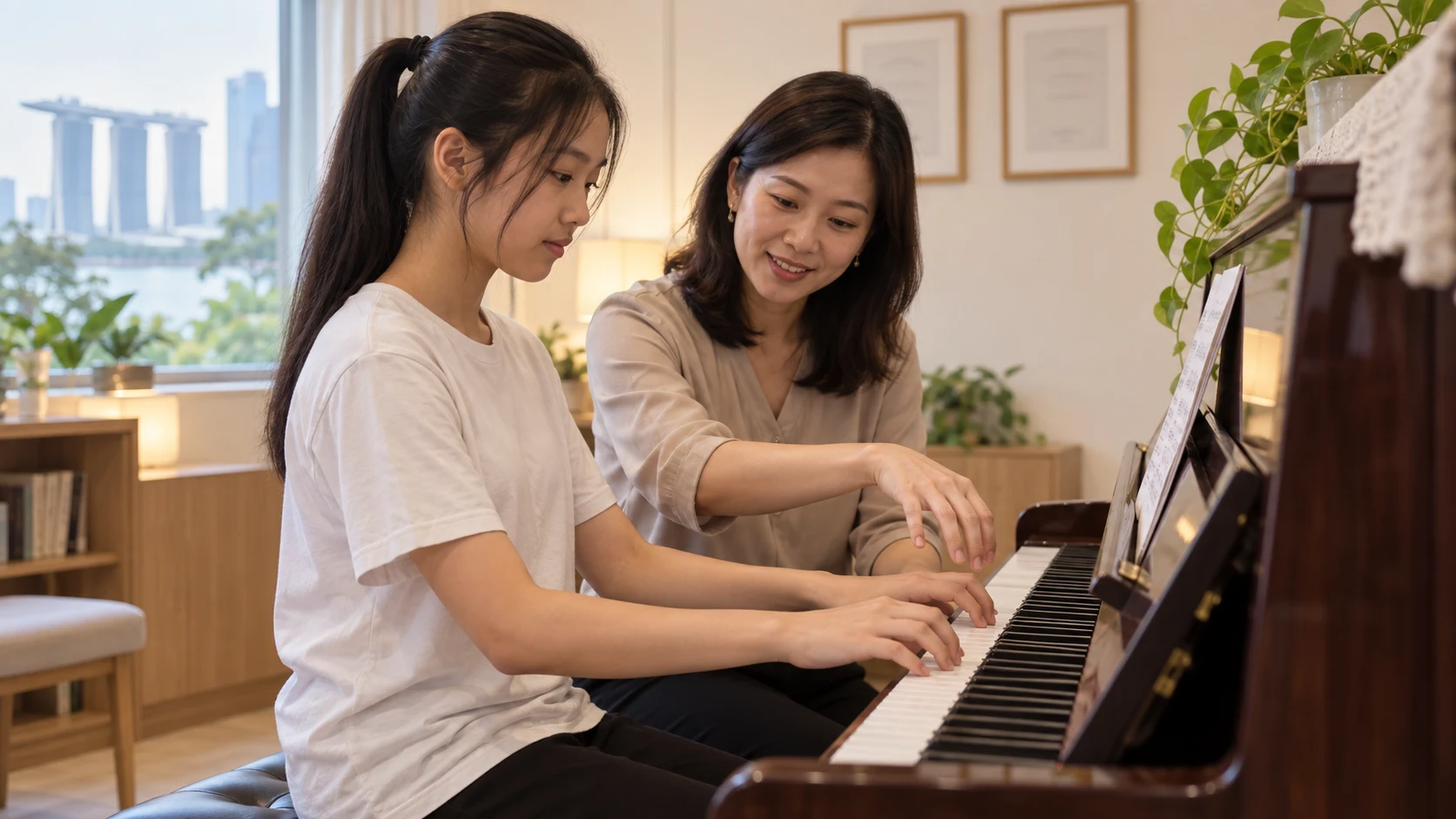
Premium piano teachers, holding diploma-level credentials such as ARSM, LRSM, or FRSM, or trained at a conservatory, charge S$100 to S$200 or more per hour. Families usually seek out this tier for advanced exam preparation, diploma-track students, or competitive performance coaching, where the teacher's own performance pedigree directly shapes the quality of instruction.
Home, Studio, or Online Piano Lessons: Price Comparison
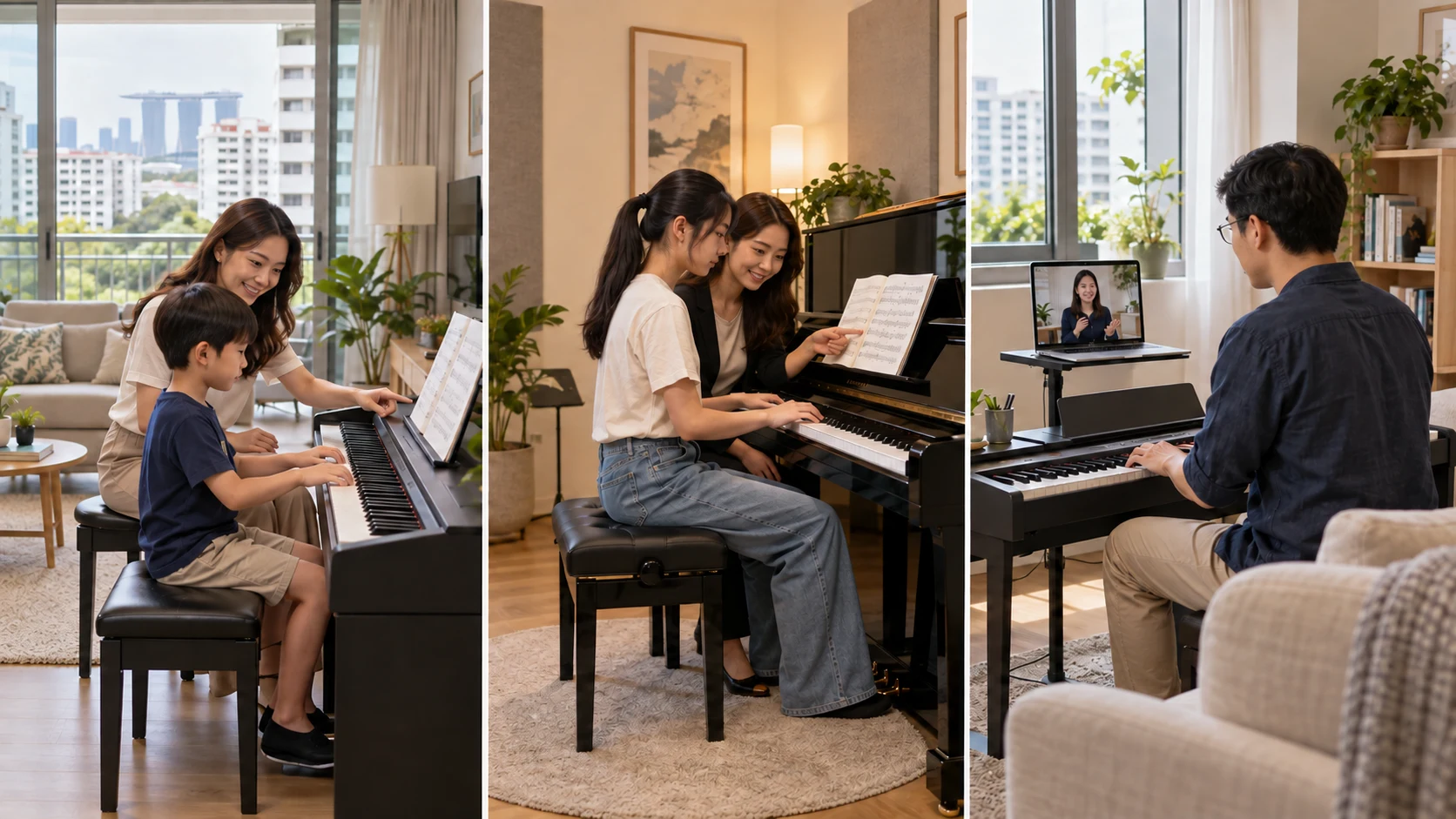
Home, studio, and online piano lessons in Singapore do cost different amounts, and the difference is consistent enough to plan around.
Home piano lessons in Singapore are usually the most expensive per hour, because the teacher is factoring in travel time, transport cost, and the time lost between appointments across the island. Families choosing this format are paying for convenience: no commute for the child, and practice happens on the family's own instrument.
Studio piano lessons tend to sit slightly lower than home visits for the same teacher, since the teacher isn't spending time traveling between students. Studios also often include access to a proper acoustic piano, which matters more as a student progresses into higher grades where touch sensitivity becomes part of the exam assessment.
Online piano lessons in Singapore are usually the most affordable format, often 10 to 20 percent below the equivalent in-person rate, since there's no travel time or studio overhead involved at all. The trade-off is that hand position and posture correction, which matter enormously for young beginners, are harder to assess accurately through a screen.
| Format | Typical Price Adjustment | Best Fit |
|---|---|---|
| Home visit | Highest, teacher factors in travel | Young children, busy households with an existing piano |
| Studio/academy | Mid-range, often includes acoustic piano access | Students needing consistent instrument access |
| Online | Lowest, no travel or studio overhead | Working adults, flexible scheduling |
Piano Lesson Price Tiers in Singapore: Budget, Mid-Range, and Premium
| Tier | Rate/hour | Typical Profile |
|---|---|---|
| Budget | S$40 – S$60 | Undergraduate or early-career teachers, group class rates |
| Mid-range | S$60 – S$100 | ABRSM or Trinity-certified, 5+ years' experience |
| Premium | S$100 – S$200+ | Conservatory-trained, diploma-level (ARSM, LRSM, FRSM) |
Within each tier, expect the price to move up as the student advances through exam grades, since Grade 6 to Grade 8 preparation genuinely takes more of the teacher's planning and correction time per lesson than early-grade instruction does.
Private Piano Lessons vs Group Piano Classes: Which Costs Less
Group piano classes are generally cheaper than private one-to-one lessons in Singapore, often by a meaningful margin. Group classes, common for early-childhood foundation programmes using structured methods like Yamaha's curriculum, typically cost 20 to 40 percent less per session than one-to-one instruction with a comparable teacher. The trade-off is individualized correction: in a group setting, a teacher simply cannot give each child the same amount of direct, personalized feedback within a single session.
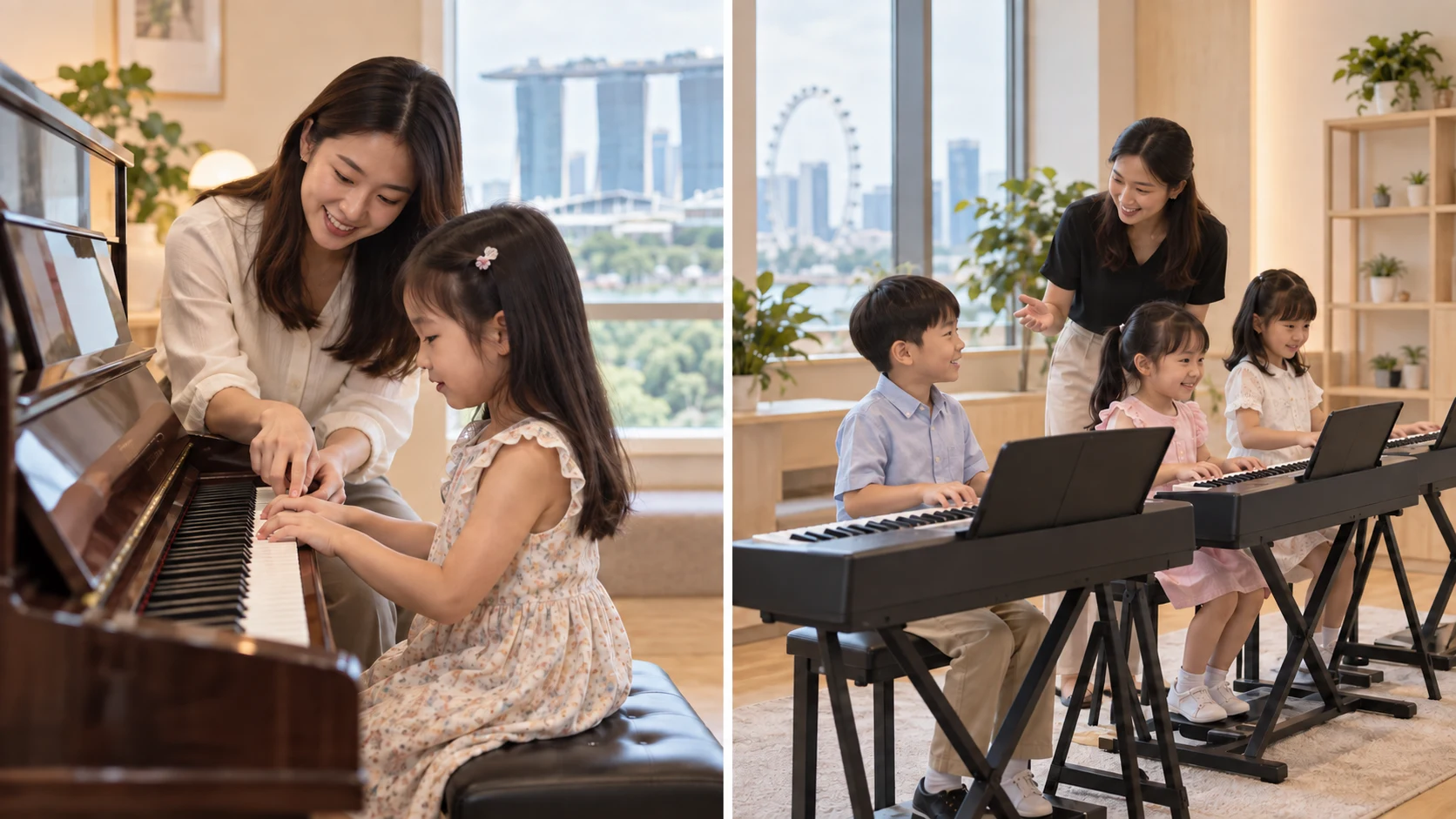
For very young beginners still building basic motor skills and musical interest, group piano classes can actually be a reasonable starting point, both financially and pedagogically, since the social element helps sustain engagement at an age where solo, structured lessons can feel isolating. Most families transition to private piano lessons once a child is ready to work toward a specific ABRSM or Trinity grade, typically around age 6 to 7, when personalized pacing starts to matter more than group dynamics.
Common Piano Lesson Pricing Misconceptions in Singapore
"The most expensive teacher is always the best choice." Not necessarily. A premium, diploma-level teacher is genuinely valuable for advanced or diploma-track students, but for a five-year-old just starting out, an enthusiastic, patient mid-range teacher may be a far better fit than an in-demand conservatory performer who's used to teaching advanced repertoire.
"Online piano lessons are a lesser, discount version of real lessons." Online lessons are priced lower mainly because of reduced overhead, not because the instruction itself is inherently worse. For theory, repertoire coaching, and students who already have a foundation, online lessons can be genuinely effective, even if hand-position correction is easier to manage in person for absolute beginners.
"Piano lesson prices are fixed and non-negotiable." Many teachers on this directory are open to discussing package rates for multiple lessons booked at once, or adjusted pricing for siblings taking lessons together. It's worth asking directly rather than assuming the listed rate is the only option.
"Group lessons and private lessons deliver the same value at different prices." They serve different purposes. Group lessons build foundational skills and musical enjoyment; private lessons are structured around an individual student's specific pace and exam timeline. Comparing them purely on price misses what each format is actually designed to do.
How ABRSM and Trinity Exam Grades Affect Piano Lesson Cost
As a student progresses through ABRSM or Trinity grades, the per-lesson cost often rises even with the same teacher, and it's useful to plan for this rather than be surprised by it later. Early grades, roughly Grade 1 to 3, usually require less preparation time outside the lesson itself, since the repertoire and technical demands are relatively contained. From around Grade 5 onward, teachers typically extend lesson length, sometimes moving from a 30-minute to a 45 or 60-minute slot, to properly cover scales, sight-reading, aural training, and the increasingly demanding set pieces.
Diploma-track students, working toward ARSM, LRSM, or FRSM, often need lessons with a conservatory-trained or diploma-level teacher specifically, since the technical and interpretive demands at that stage go well beyond what a general mid-range teacher typically covers. Budgeting for this progression in advance, rather than assuming the Grade 2 rate will hold steady through Grade 8, avoids an unpleasant surprise a few years into a child's piano journey.
How to Compare Piano Teacher Pricing on The SG Musician
Comparing piano teacher pricing across Singapore usually means contacting several teachers individually and piecing together quotes yourself, which takes time and doesn't always give you an apples-to-apples comparison. The SG Musician lists verified piano teachers and schools with pricing information directly on many profiles, so you can compare qualification level, lesson format, and rate side by side before making contact. Every listing is manually reviewed for stated credentials before it goes live, and there are no agency fees or booking commissions since you contact teachers directly. Browse the full directory of piano teachers in Singapore to compare current listings and pricing in your area.
Piano Lesson Pricing Context for Singapore Families
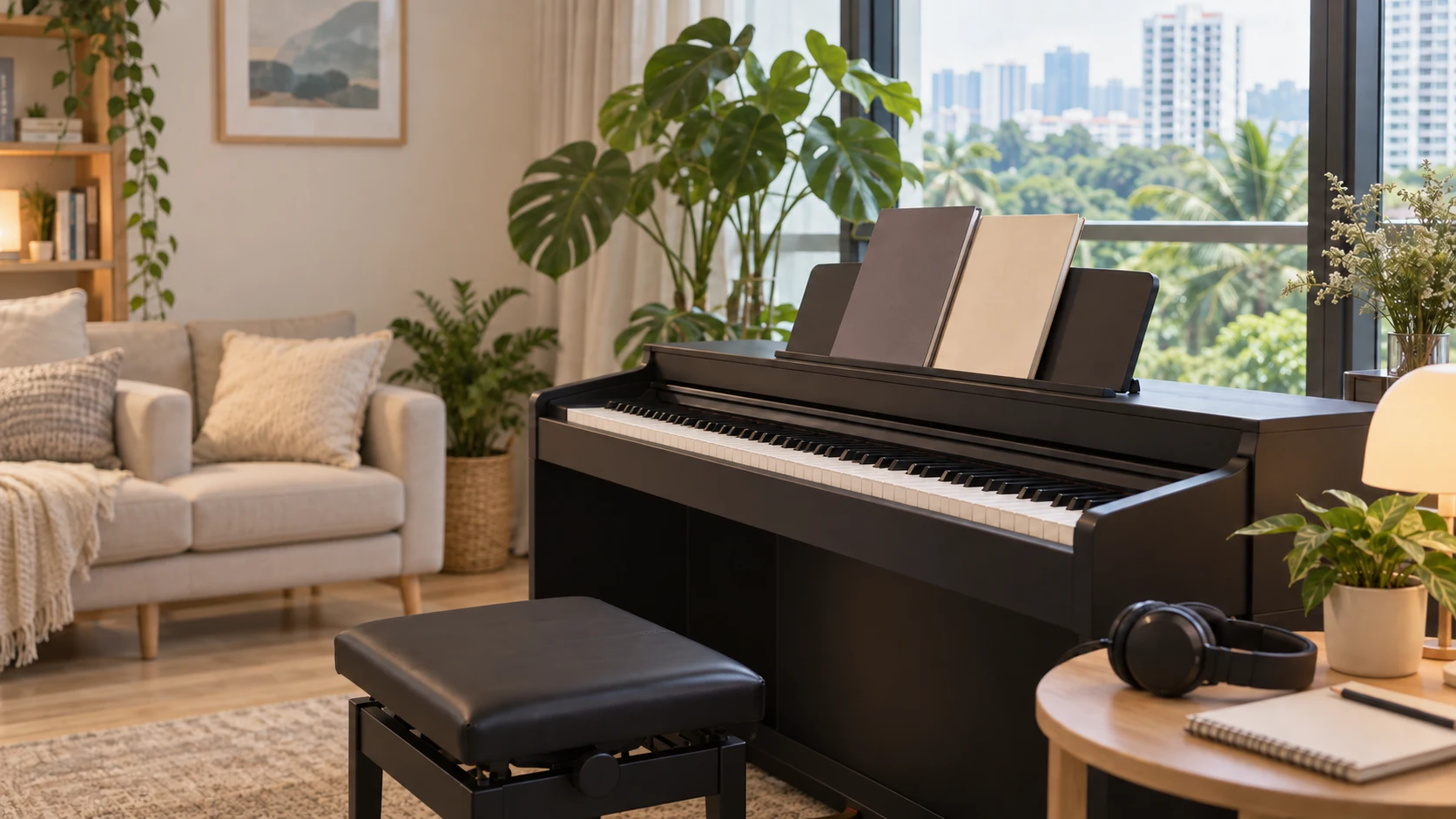
Piano lesson pricing in Singapore is shaped by a few local realities worth understanding. Many families live in HDB flats or condominiums where space for a full acoustic piano is limited, which is part of why so many beginners start on a digital keyboard, keeping the initial investment lower even before lesson costs are factored in. This also explains why home piano lessons remain popular: the teacher works with whatever instrument the family already has, rather than requiring travel to a studio.
Singapore's deeply established ABRSM and Trinity exam culture also affects pricing indirectly. Because many schools recognize graded piano certificates as part of a student's co-curricular record, demand for exam-track teachers rises predictably around the mid-year and year-end exam sittings, and some higher-demand teachers may have limited availability, or slightly firmer pricing, during these peak booking periods. Planning to start lessons a few months ahead of exam season, rather than right before it, generally gives families more room to negotiate both scheduling and price.
Hidden Costs Beyond the Hourly Piano Lesson Rate
Beyond the per-lesson rate, a few additional costs are worth budgeting for. Exam registration fees, paid directly to ABRSM or Trinity rather than to the teacher, typically add a separate cost each time a student sits a grade exam. Sheet music and exam syllabus books are a modest recurring expense, usually needed fresh for each new grade. Families opting for home piano lessons without an existing piano may also need to budget for a digital keyboard, which is a one-time cost but worth factoring in before committing to a long-term lesson plan. None of these are charged by The SG Musician itself, since the platform is free to browse and contact teachers through, but they are real costs in the overall piano-learning budget that are easy to overlook when only comparing hourly lesson rates.
Piano Lessons Cost vs Guitar and Vocal Lessons Cost in Singapore
| Instrument | Typical Range (Budget–Premium) |
|---|---|
| Piano | S$40 – S$200+ |
| Guitar | S$40 – S$120+ |
| Vocal Coaching | S$40 – S$120+ |
This comparison is useful for families weighing which instrument to start a child on partly based on budget, though the right instrument choice should still be led primarily by the student's own interest.
Checklist: Confirming a Piano Teacher's Actual Rate
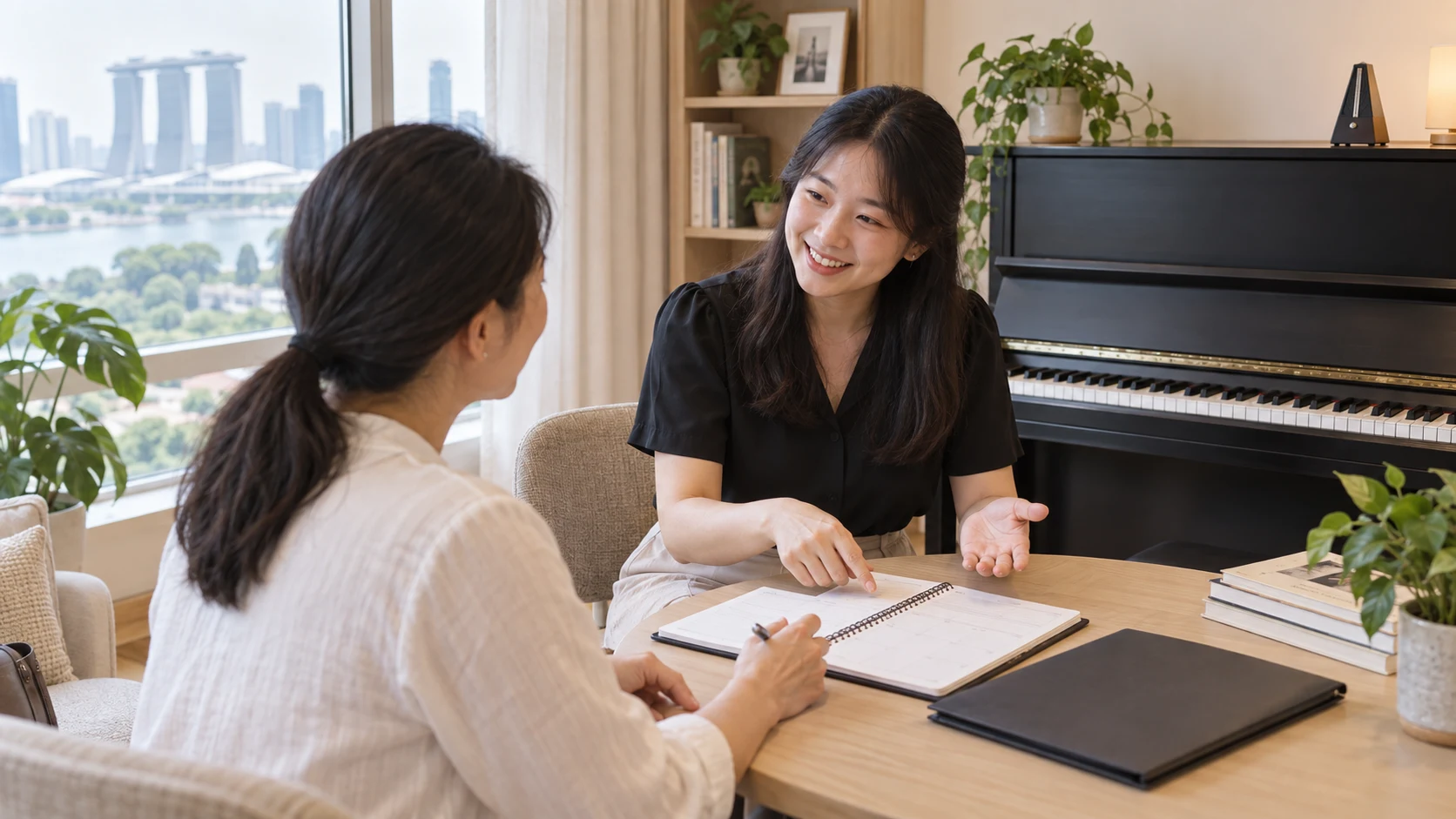
- Ask whether the quoted rate is per 30, 45, or 60-minute lesson, since this varies by teacher.
- Confirm whether the rate changes as the student progresses to a higher grade.
- Ask if there's a different rate for home visits versus lessons at the teacher's own studio.
- Check whether package or term-based booking offers any discount over paying per lesson.
- Confirm whether exam registration fees are handled separately or included in any package.
- Ask about the cancellation or rescheduling policy, since some teachers charge for late cancellations.
Related Reading on Piano Lessons in Singapore
For more on choosing the right teacher once you've settled on a budget, see our guide on how to choose a piano teacher in Singapore, and our comparison of ABRSM vs Trinity exam boards if you're still deciding which syllabus to follow. To browse verified piano teachers and compare pricing directly, visit our full directory of piano teachers in Singapore. Not sure the student is ready to start yet? Read 5 things to consider before starting piano lessons in Singapore, or compare options in our guide to the best piano teachers in Singapore.
Final Thoughts on Piano Lesson Pricing in Singapore
Piano lesson pricing in Singapore isn't a single number, it's a range shaped by a teacher's qualifications, the lesson format, and how far along a student is in their exam journey, generally spanning S$40 to S$200 or more per hour. Rather than chasing the cheapest or most prestigious option, the more useful approach is matching the teacher's qualification level to the student's actual stage, whether that's a first-time five-year-old beginner or a Grade 7 student preparing for a diploma track. Browse verified, manually reviewed piano teachers across Singapore on The SG Musician to compare qualifications and pricing directly, with no agency fees standing between you and the teacher.
Frequently Asked Questions
How much does piano lessons cost in Singapore?
Piano lessons in Singapore typically cost S$40 to S$100 per hour for budget and mid-range teachers, and S$100 to S$200 or more per hour for diploma-level or conservatory-trained teachers. The exact rate depends on qualifications, lesson format, and the student's exam grade.
Are home piano lessons more expensive than studio lessons?
Yes, generally. Home visit lessons usually cost more per hour than studio lessons because the teacher factors in travel time and transport across Singapore. Studio lessons tend to be slightly more affordable and often include access to a proper acoustic piano.
Do piano lesson prices increase as my child progresses through grades?
Yes. Higher ABRSM or Trinity grades typically require longer lessons and more preparation time, so rates commonly rise from early grades through to Grade 6 or above, and diploma-track students often need a specifically diploma-level teacher.
Are group piano classes cheaper than private one-to-one lessons?
Yes, group classes typically cost 20 to 40 percent less per session than private lessons with a comparable teacher. They suit young beginners well but offer less individualized correction than one-to-one instruction.
Is it worth paying for a premium, diploma-level piano teacher?
It depends on the student's stage. Premium teachers are genuinely valuable for advanced or diploma-track students, but for a young beginner, a patient mid-range teacher is often a better fit than an in-demand conservatory performer.
Do online piano lessons cost less than in-person lessons?
Yes, online lessons are usually 10 to 20 percent cheaper than equivalent in-person lessons, since there's no travel time or studio overhead. They work well for students with some existing foundation, though beginners may benefit more from in-person posture correction.
Are there hidden costs beyond the hourly piano lesson rate?
Yes. Exam registration fees paid directly to ABRSM or Trinity, sheet music, and a digital keyboard for home practice are common additional costs not included in the teacher's hourly rate.
Does The SG Musician charge a fee to contact a piano teacher?
No. Browsing listings and contacting piano teachers directly through The SG Musician is completely free. There are no agency commissions or booking fees charged to parents or students.
Can I negotiate piano lesson prices in Singapore?
Some teachers are open to discussing package rates for multiple lessons booked in advance, or adjusted pricing for siblings taking lessons together. It's worth asking directly, since listed rates aren't always fixed.
What's a reasonable starting budget for a child's first piano lessons?
For a young beginner starting with a mid-range, qualified teacher, budgeting around S$60 to S$80 per hour for weekly 30 to 45-minute lessons is a reasonable starting point, before accounting for exam fees or an instrument if the family doesn't already own one.
Author Spotlight
Richard writes about learning music in Singapore. He helps students and parents find the right teacher, understand lesson costs, and get more out of every lesson.
Looking for a music teacher?
Browse verified teachers and studios across Singapore and get in touch in minutes.
Related Articles

How to Find the Right Violin Teacher in Singapore
Looking for a violin teacher in Singapore? Compare qualifications, formats, pricing, and what to ask in a trial lesson before you book.

5 Things to Consider Before Starting Piano Lessons in Singapore
Thinking about piano lessons in Singapore? Compare readiness, formats, cost, exam tracks, and how to find qualified piano teachers before you book.

How to Choose a Piano Teacher in Singapore
Choosing a piano teacher in Singapore? Compare qualifications, exam boards, lesson formats and what to ask before booking a trial lesson.