

Best Piano Teachers in Singapore: How to Compare and Choose
The best piano teachers in Singapore are the ones whose teaching style, qualifications, and lesson format actually match your child's or your own learning goals, not simply the ones with the most impressive-sounding credentials. Choosing well means comparing real factors side by side rather than picking the first name that comes up in a search. The SG Musician exists to make that comparison easier, listing only manually verified piano teachers and schools across Singapore so families and adult learners can contact instructors directly, without agency middlemen.
Key Takeaways: Choosing a Piano Teacher in Singapore
- Most piano teachers in Singapore offer a trial lesson before any commitment, typically 30 to 45 minutes long.
- Children usually start formal piano lessons between ages 5 and 7, though some begin as early as 4 with a Yamaha-style early childhood approach.
- The five major exam boards active in Singapore are ABRSM, Trinity, LCM, Yamaha, and Guildhall, each with different grading structures.
- One-to-one lessons are the norm for exam-track students, while group lessons suit casual beginners and younger children.
- Manual verification on directories like The SG Musician typically checks qualifications, teaching experience, and identity before a listing goes live.
What Makes a Piano Teacher "the Best" in Singapore
"Best" is not a fixed title. It is a fit between a teacher's training, teaching style, and your specific goals, whether that's passing an exam, learning for enjoyment, or restarting after years away from the instrument. A teacher who is excellent for a 6-year-old absolute beginner may not be the right choice for an adult preparing for an ABRSM Grade 8 exam, and vice versa. The qualities that matter most are relevant qualifications, communication style, teaching track record, and how well the lesson format fits your household's schedule and space.
In Singapore's music education landscape, this question comes up constantly because the market is genuinely varied. Parents searching for a piano teacher are often comparing a home-based tutor working from an HDB flat, a full-time instructor teaching from a condominium studio, and a music school offering group classes, all at once. Each format has real trade-offs in cost, flexibility, and teaching depth.
Singapore also has a strong exam culture that shapes how "best" gets defined locally. Many parents are not just asking who teaches piano well, but who has a track record preparing students for ABRSM or Trinity exams, since these certificates carry weight for co-curricular activity (CCA) recognition and, in some cases, university applications. Adult learners searching for a teacher usually have a different definition entirely: someone patient, flexible with scheduling, and comfortable teaching a beginner who has never touched a keyboard, or a returning player who wants to pick things back up without the pressure of grading.
Because "best" shifts depending on who is asking, the smartest way to search is not for a single ranked list, but for a teacher whose specific specialisation matches your stage: beginner, exam-track, casual, or advanced.
How to Compare Piano Teacher Qualifications and Experience
What qualifications should you look for
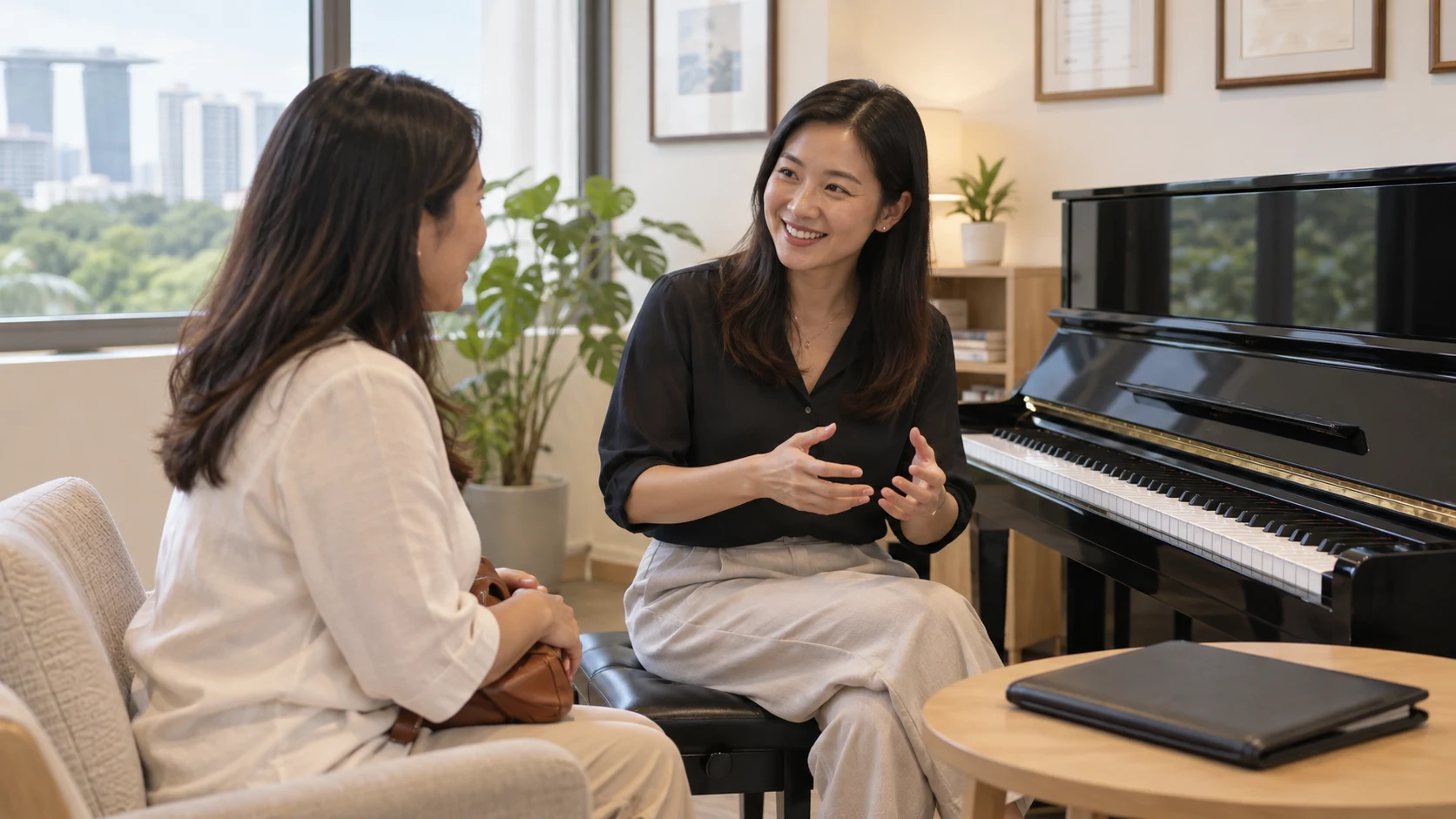
A teacher's formal training matters, but so does how they apply it. Look for a recognised qualification such as an ABRSM diploma (ARSM, LRSM, or higher), a Trinity teaching certificate, or conservatory-level training, alongside a clear account of how many years they have taught and what age groups or levels they specialise in. A qualification on its own does not guarantee good teaching; ask how they explain concepts and how they handle a student who is struggling.
Does teaching experience with your child's age group matter
Yes, significantly. Teaching a 5-year-old requires a completely different skill set from preparing a 16-year-old for a Grade 6 exam. Teachers experienced with young beginners typically use age-appropriate methods such as the Yamaha Music Education System, which introduces rhythm and listening before formal notation. A teacher who mainly works with exam-track teenagers or adults may not have the patience or technique-building sequence a 5-year-old needs.
How should you weigh location and format
Home-based lessons save travel time but depend on having a decent piano or keyboard at home, something that is not always straightforward in a smaller HDB flat. Studio-based lessons, common in condominium developments and dedicated music schools, offer access to a proper acoustic piano and a distraction-free space, at the cost of commuting. Neither format is inherently "better"; it depends on your household's setup and how far you're willing to travel regularly.
One-to-One vs Group Piano Lessons in Singapore
For piano specifically, one-to-one lessons remain the dominant format, especially once a student is working toward an exam grade, because piano technique and repertoire progression are highly individual. Group lessons exist mainly for very young beginners in Yamaha-style programmes, where the group setting builds musicality and confidence before individual skill-building takes over, and for casual adult learners who want a lower-cost, lower-pressure introduction.
| Factor | One-to-One Lessons | Group Lessons |
|---|---|---|
| Best for | Exam-track students, advanced players, focused skill-building | Young beginners (Yamaha-style), casual introductions |
| Pace | Fully personalised to the student | Set by the group's average level |
| Typical age fit | From early exam-track years through adulthood | Often ages 4 to 7 for early childhood programmes |
| Feedback depth | Immediate, individual correction | Shared attention across the group |
| Social element | Minimal | Higher, especially for young children |
| Common exam-prep use | Standard approach for ABRSM, Trinity, LCM exams | Rare beyond very early stages |
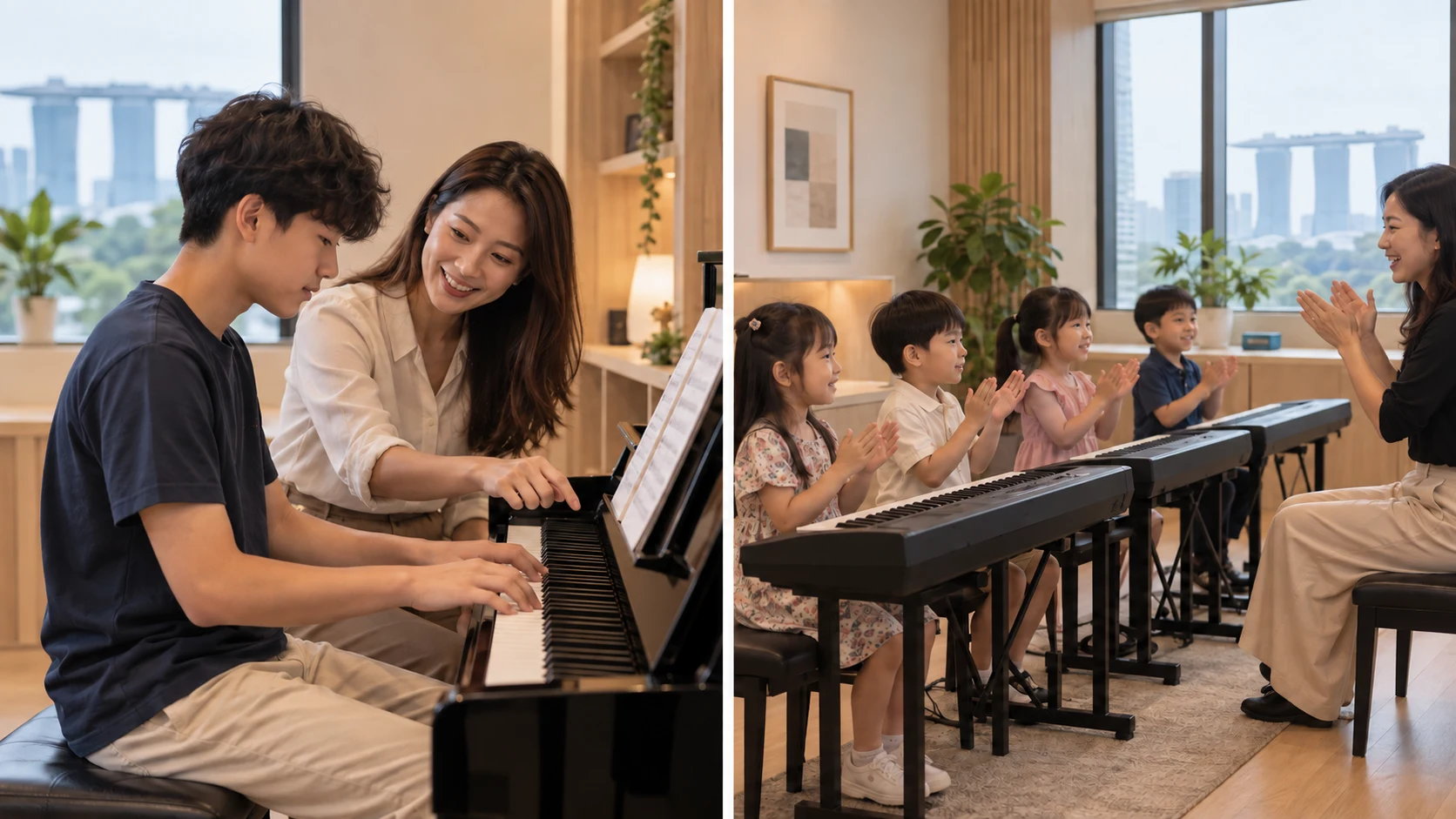
If your child is preparing for a specific exam board's syllabus, one-to-one lessons with a teacher experienced in that board's requirements are almost always the more direct route. If your goal is simply to introduce a young child to music in a fun, low-stakes way, a group format can be the better starting point before transitioning to individual lessons later.
Signs a Piano Teacher's Style Is a Good Fit
Some signs are practical and easy to check upfront. Does the teacher offer a trial lesson? Most reputable piano teachers in Singapore do, usually lasting 30 to 45 minutes, and this is the single best way to judge fit before committing to a term of lessons. Does the teacher explain, before the first lesson, what a typical practice routine looks like and how often you should expect to practise between sessions? A teacher who sets clear, realistic expectations from the start is usually more structured in their overall teaching.
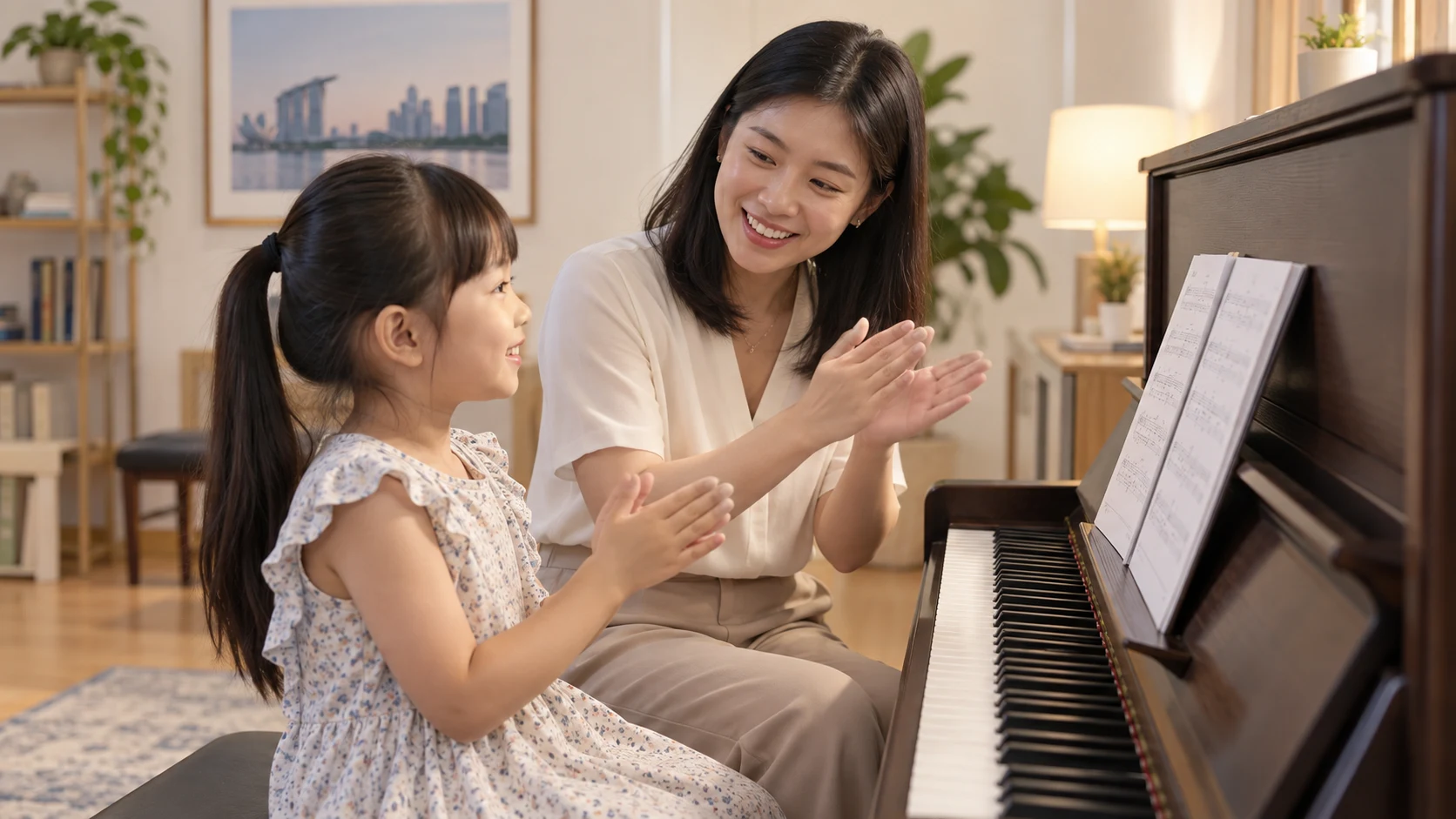
Other signs only become clear after a lesson or two. Watch for whether the teacher adjusts explanations when a concept isn't landing, rather than repeating the same explanation more loudly or more slowly. Notice whether they build in encouragement alongside correction, particularly important for young children who can lose motivation quickly if lessons feel like constant criticism. For adult learners, a good sign is a teacher who asks about your specific goals early on, rather than defaulting to a generic beginner method that may not suit someone restarting after years of gap.
Response time before the first lesson is also a practical, if less discussed, signal. A teacher or school that responds promptly and clearly to an initial enquiry is more likely to communicate reliably once lessons are underway.
Piano Lessons for Adult Beginners in Singapore
Adult learners returning to piano after a long break, or starting completely fresh, have a different set of needs from a young beginner, even though the notes on the page are the same. Adults generally learn theory faster but may feel more self-conscious about mistakes, so a teacher's patience and encouragement matter as much as their technical knowledge. Many adult learners are not aiming for an exam grade at all; they want to play specific songs, understand music more deeply, or simply enjoy a creative outlet after work.
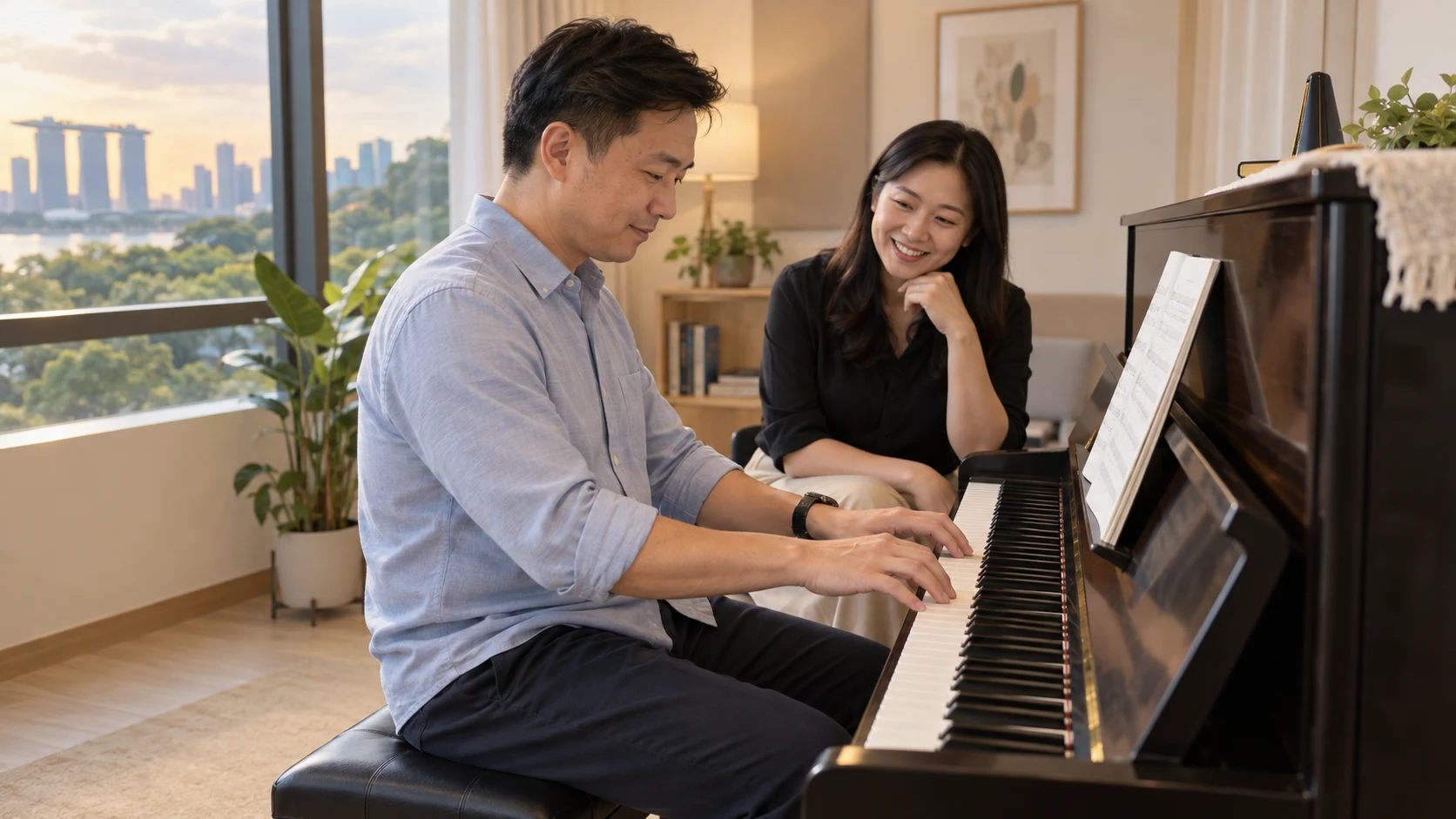
When searching for a teacher as an adult, it's worth explicitly asking whether they have experience teaching adults, since a teacher whose entire background is with children under 10 may default to a teaching style built around a young learner's attention span and motivation triggers, which does not always translate well to an adult student. Flexible scheduling also matters more here, since adult learners are typically fitting lessons around work hours rather than a fixed after-school routine. Evening and weekend slots tend to be in higher demand and may need to be booked further ahead.
Common Misconceptions About Piano Teachers in Singapore
"A more expensive teacher is automatically a better teacher." Price often reflects a teacher's qualifications and experience level, but it does not guarantee the right fit for your specific goals. A highly qualified exam-prep specialist may be a poor match for a casual adult learner who just wants to enjoy playing, regardless of their rate.
"Any teacher can prepare a student for any exam board." ABRSM, Trinity, LCM, Yamaha, and Guildhall each have distinct syllabus structures, marking criteria, and repertoire lists. A teacher deeply experienced with ABRSM may not be equally familiar with Trinity's assessment style, so it's worth asking directly about a teacher's experience with the specific board you're targeting.
"Group lessons are always cheaper and just as effective as one-to-one." Group lessons can be more budget-friendly and are genuinely effective for early childhood music foundations, but they are not a substitute for individual instruction once a student is working toward specific exam repertoire or advanced technique.
"A young child who struggles in the first month isn't ready for piano." Early frustration is often about teaching style mismatch rather than readiness. Many children who struggle with one teaching approach thrive with a different one, particularly when the format shifts from strict note-reading drills to a more listening-based method like Yamaha's early approach.
ABRSM, Trinity, LCM, Yamaha, and Guildhall Explained
These five names come up constantly in Singapore piano circles, and understanding the basic differences helps you ask better questions when comparing teachers. ABRSM (Associated Board of the Royal Schools of Music) is the most widely recognised board internationally and in Singapore, with a graded exam structure from Initial/Grade 1 through Grade 8, followed by diploma levels like ARSM, DipABRSM, LRSM, and FRSM. Trinity College London offers a similar graded structure but is known for slightly more flexibility in repertoire choice and a stronger emphasis on musicality in performance assessment.
LCM (London College of Music) exams are less common in Singapore than ABRSM or Trinity but are recognised internationally and sometimes chosen by teachers who prefer LCM's specific syllabus style. Yamaha's system is different in structure: rather than a single-instrument grading ladder, it's built around a broader music education philosophy, often used for very young beginners before they transition into a graded exam board later. Guildhall (Guildhall School of Music and Drama) exams are less frequently pursued at the earlier grades but appear more often at advanced and diploma levels for serious students.
For CCA recognition purposes in Singapore schools, ABRSM and Trinity certificates are the two most commonly accepted, though policies vary by school, so it's worth confirming directly with your child's school rather than assuming.
How The SG Musician Helps You Find a Verified Piano Teacher
Comparing piano teachers well takes time, and that's exactly what The SG Musician is built to simplify. Every teacher and school on the platform goes through a manual verification process before their listing goes live, checking that the qualifications and experience they state are genuine. Because there's no agency layer, parents and adult learners contact teachers directly through each listing's enquiry form, with no added commission built into lesson fees.
Browsing verified listings lets you filter by the kind of factors covered in this guide: exam board experience, teaching format, age specialisation, and location, so you can shortlist a small number of teachers who genuinely match your goals before requesting a trial lesson. If you're ready to start comparing real teacher profiles rather than generic search results, visit the piano teachers hub to see verified listings across Singapore.
Piano Lessons in Singapore: HDB, Condo, and Exam-Season Context
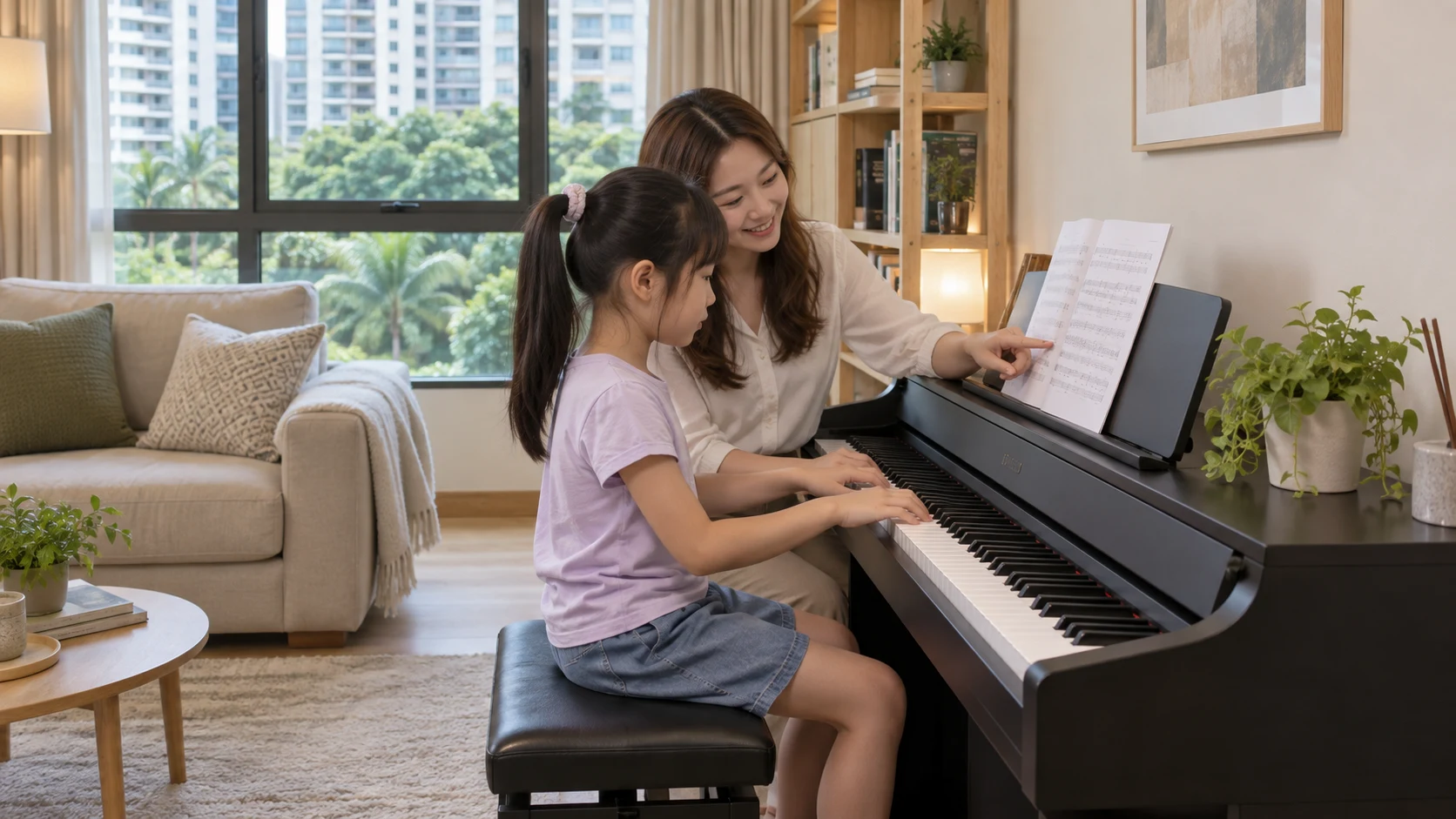
Housing type genuinely shapes how piano lessons work in Singapore. A family in an HDB flat may have a digital piano or keyboard rather than a full acoustic upright, which is a completely reasonable starting instrument for beginners but worth mentioning to a prospective teacher, since some teachers have preferences about the minimum instrument quality needed for certain exam levels. Condominium residents sometimes have access to a shared function room or their own space for a full acoustic piano, which can open up more teaching format options.
Singapore's exam calendar also shapes demand patterns throughout the year. ABRSM and Trinity exam sessions typically run at set points during the year, and many families intensify lesson frequency in the months leading up to a scheduled exam sitting. This means teacher availability, particularly for popular exam-track instructors, tends to tighten in the run-up to these periods, so starting the search for a teacher well before exam season gives you more options.
Co-curricular recognition adds another layer of local relevance. Because many Singapore schools give CCA points or recognition for ABRSM and Trinity grade certificates, some families choose an exam-track teacher specifically for this reason, even if the student's personal interest is closer to casual playing. It's worth being honest with a prospective teacher about which motivation applies, since it changes how a lesson plan should be structured.
Solo Piano Teacher vs Music School: Which Should You Choose
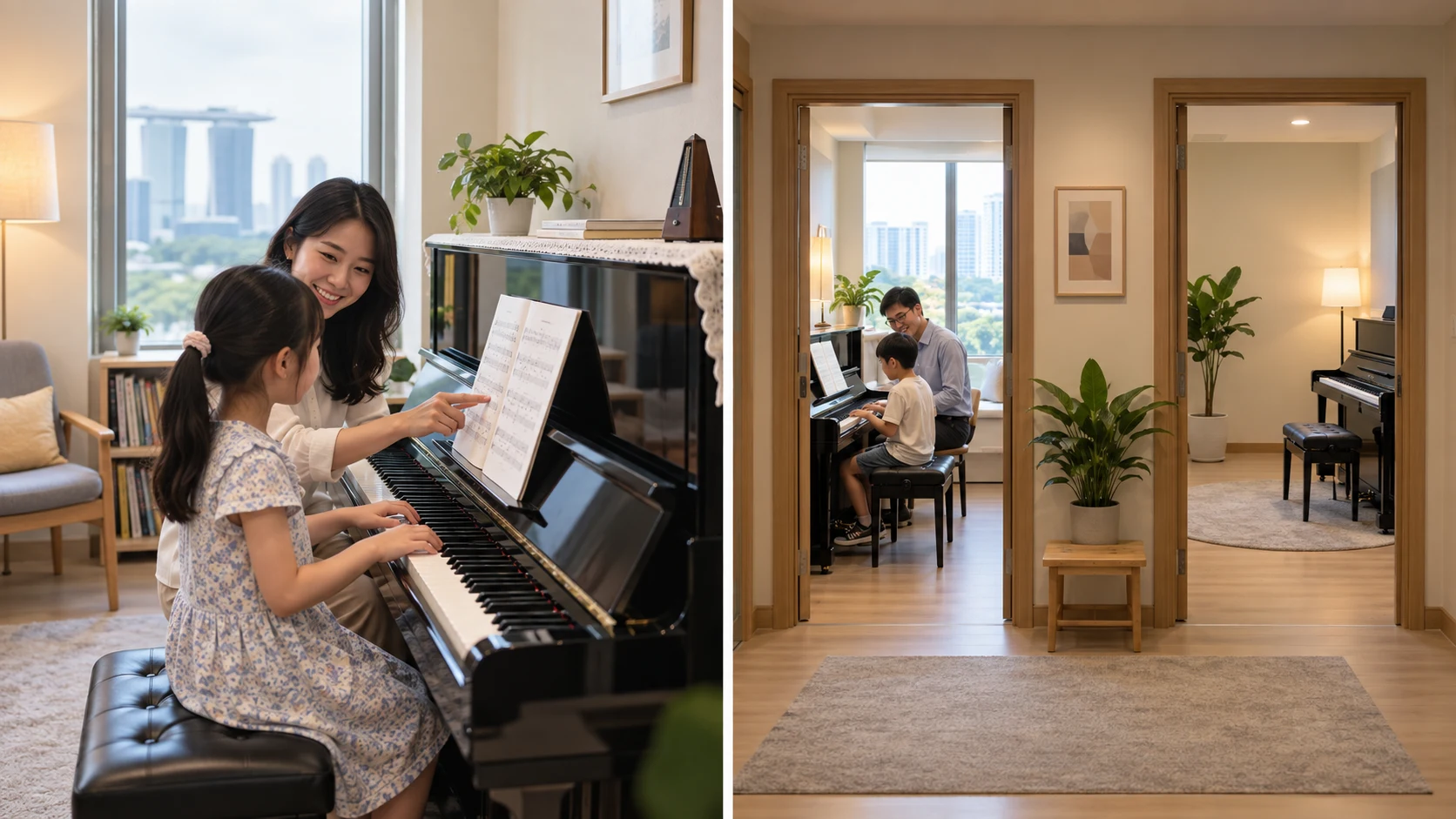
A solo, independent piano teacher typically offers more personalised, consistent instruction since the same person teaches every lesson and gets to know a student's specific strengths and gaps over time. Scheduling is often more flexible too, since you're coordinating directly with one person rather than a school's broader timetable. The trade-off is that if a solo teacher is unavailable due to illness or travel, lessons may simply be rescheduled or paused, with no built-in substitute.
A music school offers more structural backup: if your assigned teacher is unavailable, there may be a substitute available, and schools often have more standardised curricula and progress tracking systems. Some schools also offer performance opportunities like recitals that a solo teacher's students might not have access to. The right choice often comes down to whether you value the continuity and flexibility of one dedicated teacher, or the structure and backup of an institution.
Piano Teacher Comparison Table for Singapore Families
| Consideration | Solo/Independent Teacher | Music School | Home-Based | Studio/Condo-Based |
|---|---|---|---|---|
| Consistency | Same teacher every lesson | May vary if reassigned | Depends on teacher | Depends on teacher |
| Backup if unavailable | Usually none | Often has substitutes | N/A | N/A |
| Scheduling flexibility | Typically high | Often fixed timetable | High | Moderate |
| Instrument access | Depends on location | Usually acoustic pianos on site | Depends on household | Often acoustic piano available |
| Performance opportunities | Varies by teacher | Often built into programme | Rare unless arranged | Sometimes available |
| Best suited for | Personalised, long-term progress | Structured curriculum with backup | Convenience-focused families | Serious practice environment |
This table is a starting point rather than a rulebook. The right combination depends on your child's temperament, your household's schedule, and what kind of learning environment actually gets consistent practice happening at home.
Checklist Before You Book a Piano Teacher in Singapore
- Confirm the teacher's relevant qualification (ABRSM, Trinity, LCM, Yamaha, or Guildhall) and how many years they've taught.
- Ask specifically about their experience with your target exam board, if exam preparation is your goal.
- Book a trial lesson, typically 30 to 45 minutes, before committing to a term.
- Clarify the lesson format: one-to-one or group, home-based or studio-based.
- Ask what practice routine they expect between lessons and how they handle a student who's falling behind.
- Confirm scheduling flexibility, especially important for adult learners working around a job.
- If CCA recognition matters, check with your child's school which exam boards they accept before choosing a teacher.
- Ask about their experience with your child's specific age group, or with adult beginners if that applies to you.
Working through this list before your first enquiry turns a vague search into a short, well-informed shortlist.
Related Reading on Piano Lessons in Singapore
To go deeper on related topics, explore how ABRSM and Trinity exam pathways compare in detail, what a typical piano lesson costs across different formats in Singapore, and how to prepare a young child for their very first music lesson. If you are ready to narrow down your shortlist, our step-by-step guide on how to choose a piano teacher in Singapore walks through the process. For the full list of verified piano teachers and schools across Singapore, visit the piano teachers hub page.
Final Thoughts on Choosing the Best Piano Teacher
Finding the best piano teacher in Singapore isn't about chasing a single top-ranked name; it's about matching a teacher's qualifications, experience, and teaching style to your specific stage, whether that's a young beginner starting out, a student on an exam track, or an adult picking the instrument back up after years away. Comparing format, exam board experience, and communication style before booking a trial lesson puts you in a far stronger position than picking blindly.
The SG Musician's verified listings make that comparison possible without agency fees or middlemen, connecting you directly with teachers whose credentials have been checked. Start browsing verified piano teachers and book a trial lesson with a teacher who genuinely fits your goals.
Frequently Asked Questions
How do I know if a piano teacher in Singapore is actually qualified?
Ask directly about their formal training, such as an ABRSM or Trinity diploma, and how many years they've taught. On a verified directory like The SG Musician, listings go through a manual check before going live, but it's still worth asking the teacher directly for details about their specific experience with your goals.
What age should my child start piano lessons?
Most children in Singapore start formal piano lessons between ages 5 and 7, when fine motor skills and attention span are developed enough for structured learning. Some programmes, particularly Yamaha-style early childhood classes, accept children as young as 4 using a listening-first approach before formal notation begins.
Should I choose a teacher who prepares students for ABRSM or Trinity exams?
It depends on your goals. If CCA recognition or a formal grading pathway matters to you, choose a teacher experienced with the specific board your child's school recognises. If your goal is casual enjoyment, an exam-track focus isn't necessary and a more flexible teaching style may suit better.
Is it better to choose one-to-one or group piano lessons?
One-to-one lessons are the standard for exam-track students and anyone wanting personalised, fast-paced progress. Group lessons work well for very young beginners in early childhood programmes and for casual learners who want a lower-pressure introduction before deciding whether to continue.
Can adults realistically learn piano from scratch in Singapore?
Yes, and it's a common reason adults search for a piano teacher. The key is finding a teacher with genuine experience teaching adults, since adult learners often want a different pace and focus than the standard children's curriculum, particularly around flexible scheduling and specific song goals rather than exam grading.
What's the difference between ABRSM and Trinity exams?
ABRSM is the most widely recognised exam board internationally and in Singapore, with a strict graded repertoire list. Trinity College London follows a similar grading structure but allows more repertoire flexibility and places extra weight on musicality during performance assessment, making it a common alternative choice.
Do I need to own an acoustic piano to start lessons?
No. Many beginners, especially in HDB flats, start on a good digital piano or keyboard with weighted keys. It's worth mentioning your instrument setup to a prospective teacher upfront, since some teachers have preferences about instrument quality once a student reaches higher exam grades.
How long is a typical trial piano lesson?
Most piano teachers in Singapore offer a trial lesson lasting 30 to 45 minutes. This session lets both the teacher and student assess fit before committing to ongoing lessons, and it's one of the most reliable ways to judge teaching style before booking a full term.
Is a more experienced teacher always the right choice for a beginner?
Not necessarily. A highly experienced exam-prep specialist may not be the best fit for a very young beginner or a casual adult learner, since teaching style and patience with beginners matter more at this stage than advanced credentials. Match the teacher's specialisation to your specific starting point.
How do I contact a piano teacher listed on The SG Musician?
Each verified listing includes a direct enquiry form, allowing you to contact the teacher or school without going through an agency or paying added commission. This direct-contact model means your first conversation happens straight with the person who will actually be teaching.
Author Spotlight
Richard writes about learning music in Singapore. He helps students and parents find the right teacher, understand lesson costs, and get more out of every lesson.
Looking for a music teacher?
Browse verified teachers and studios across Singapore and get in touch in minutes.
Related Articles

How to Find the Right Violin Teacher in Singapore
Looking for a violin teacher in Singapore? Compare qualifications, formats, pricing, and what to ask in a trial lesson before you book.

5 Things to Consider Before Starting Piano Lessons in Singapore
Thinking about piano lessons in Singapore? Compare readiness, formats, cost, exam tracks, and how to find qualified piano teachers before you book.

How to Choose a Piano Teacher in Singapore
Choosing a piano teacher in Singapore? Compare qualifications, exam boards, lesson formats and what to ask before booking a trial lesson.